Install Windows Xp From Usb Msfnxy
OK These days I was trying to copy my windows xp setup disk in my pendrive and install it from there. I became mad because I was looking for something very easy to use that just take seconds to do what I want. This software exist! Rufus can make a bootable usb disk using MS-DOS stored in the system or using a system ISO. You can create Windows XP, Windows 7 or Linux bootdisk very easily! These are the steps to follow!. Download rufus from.
I am trying to install windows XP SP 3 from a USB and discovered its not easily done because XP doesnt support it, so i got software that enables me to do it from a. Can I use my newly created USB drive to install Windows. Can I use the Windows USB/DVD Download Tool. If you’re running Windows XP, you must install the. Installing Windows XP to a USB flash drive can be useful in case your hard drive ever crashes or your computer becomes infected with a virus. To install Windows XP to.
Plug in your USB Flash drive. to make a Windows bootdisk (Windows XP/7) select NTFS as file system. then click on the buttons that looks like a DVD drive, that one near to the checkbox that says 'Create bootable disk usng:'. Choose the XP ISO. Click Start Done!
Update: Before you try all of this, you may want to, a utility designed to create a bootable Windows flash drive for Windows XP/Vista/7/Server. If this works for you, you can skip the section on preparing a flash drive and jump straight to the installation instructions. Also, keep in mind, these notes were written for installing Windows XP on the HP 2133 Mini-Note. Although many of these steps will apply for different computers, some of the commands may differ a little bit. Update 2: If you’re trying to install Windows 7 on a netbook, Microsoft is making things even easier. Just use the Windows 7 USB tool. Installing Windows XP or any other operating system is easy if you have a USB optical disc drive. But if all you’ve got is a USB flash drive and another computer with a DVD burner, you can still install Windows XP (or many Linux distributions for that matter) on a disc drive-less ultraportable like the HP Mini-Note or the Asus Eee PC.
After spending most of Saturday installing Windows XP on my HP Mini-Note I thought I’d share my results with you. Remember, your results may very, so while these are the steps that worked for me, they may not work for you. For example, depending on the version of Windows XP you are using, you may need a different hotfix to install the audio drivers. There were two resources that were extraordinarily helpful. Bsumpter at MiniNoteUser wrote up for installing XP on a Mini-Note, and EeeGuides has a great walkthrough for.
Windows Bootable Usb
By combining these methods and a few other, I was able to setup my Mini-Note with a Windows partition, a spare partition for installing Linux, and a large data partition for shared files. Here’s what you’ll need:. 1 USB flash drive, 1GB or larger. 1 Windows XP installation disc. Assorted files that I’ll describe as we go along.
Preparing the flash drive First up, we need to prepare the flash drive. Download and unzip. It should contain 2 folders: 1 titled Bootsect, and the other USBprep8.
Navigate to the USBprep8 folder and click on usbprep8.cmd. This will bring up a Windows console window.
Press any key to continue and a PeToUSB window will open. Make sure your flash drive is selected, and click start to format your flash drive. When the format is complete, click OK, but do not close the PeToUSB window or the Windows Console. Open a new console window by typing “cmd” into the run box in the Windows Start Menu. Find your Bootsect folder (if you’re not used to DOS commands, you can type “dir” to list directories and files, type “cd foldername” to navigate to a folder name – called foldername in this example, and if there’s a long folder name you can save time by typing the “cd” and just the first few letters and then hitting the Tab key to fill in the rest of the name). Once you’re in the Bootsect folder, type “bootsect.exe /nt52 g:” if “g” is the letter assigned to your flash drive.
If it’s E, then change the letter to e. If it’s Z, make it z. When this is done, you should see a message letting you know that the bootcode was updated, and you can close this console window (but not the other console window). Close the PeToUSb Window, but make sure not to close the remaining console window yet. You should now see a list of 8 options in the console.
How To Install Windows Xp From Usb
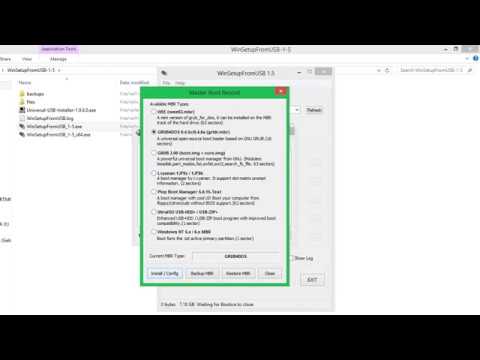
Select one and find the drive with your Windows installation disc. Select 2 and pick a random drive letter (but not one that’s already on your PC, since this will be a virtual drive used for copying your files). Select 3 and enter the drive letter for your USB flash drive. Select 4 and follow the rest of the on-screen directions and you should be all set. The process should take about 15-20 minutes. When it’s done, you should have a bootable USB stick that you can use to install Windows XP the same way you would if you had a CD/DVD drive. A few notes here.
Bootable Windows Xp Iso Download
First of all, there’s a chance you may get down to step 15 and the program will tell you that it can’t create the virtual drive. This may happen if you’ve already gone through the whole process and are trying to do it again to fix problems. The solution seems to be rebooting your computer and trying again. Or at least that’s what worked for me. Second, if you use to shrink/slipstream/otherwise modify your Windows XP installation file, make sure you do not remove “manual installation files,” or your USB stick will be pretty much useless.
Installing XP on the netbook Now it’s time to load Windows XP onto your Mini-Note. If you have a USB CD/DVD drive, you probably skipped all the stuff above, and that’s fine. Most of the following steps should work as well. These instructions should work whether you’re installing Windows XP on a system that came preloaded with SUSE or Windows Vista. Insert your USB flash drive in one of the USB ports on your Mini-Note. Power on your computer and hit F9 to bring up a boot device selection window. This Fn key may differ if you have a different computer model.
Choose your flash drive, or if you’re using a USB optical disc drive, select that instead. Select 2 for a text-based installation.

Make sure to delete all of the partitions on the hard drive. While you may have some success creating separate partitions on your hard drive using this method, I did not. If you find yourself with a Hal.dll or bootloader missing error when you’re finished, there’s a good chance it’s because you did not delete all of the partitions. Note that I will be providing instructions in the next section for partitioning your hard drive after installing Windows XP, so you can still create a Linux partition later. Create one large NTFS partition (using the quick option will save you a lot of time). Follow the on-screen directions. At least once during the install process, you will be prompted to reboot your computer.
If you try to let it boot from the hard drive, you’ll get an error message. What you need to do is hit F9 again when it reboots and this time select option 1 for a GUI setup.
Once you’re done installing XP, you may notice that you are unable to boot into Windows from the hard drive. If you have the USB disk installed, again hit F9, and select the GUI option again. Windows should start. You’ll need to edit the boot.ini file:.
Type “msconfig” into the run box in the start menu. Select the BOOT.INI tab. First, try the “Check All Boot Paths,” option. This may solve your problem by finding and removing the incorrect boot settings. You may also need to edit the boot.ini file manually if it doesn’t read something like ‘multi(o)disk(0)rdisk(o)partition(1) Windows=”Windows XP Pro” /fastdetect’. The most likely problem is that wrong partition is selected.
It may say (0) or (2) or something like that. The steps below will show you how to backup and edit it. Open your System Properties by right-clicking on My Computer and choosing Properties. Alternately, you could type “sysdm.cpl” into the run box in the start menu. Select the Advanced Tab.

Click the Settings option under Star tup and Recovery. Click the button that says Edit to open up your boot.ini file in Notepad. It’s a good idea to save a backup now by selecting Save As, and saving the file to a place where you won’t forget it. Now you can (somewhat) safely edit the boot.ini file, changing the partition number or other settings to more closely resemble the one I listed above. Save your file, and hopefully you’ll be able to reboot without your USB stick. Configuring Windows XP While the steps above will allow you to install Windows XP on your netbook, you may still need to download drivers from your manufacturer before all of the hardware works properly.
For instance, to configure the HP Mini-Note 2133 I had to install wireless, audio, and display drivers. Update: HP has added Windows XP drivers to its. You should try these official drivers before using the drivers listed below. Using Parted Magic to create new partitions for Linux or other operating systems While I tend to use Windows XP on a day to day basis, I wanted to make this a dual boot system so I can install Linux on a separate partition.
Most Linux distributions aren’t very particular about where they’re installed. You can put them on a second or third partition, or even on an SD card in your card reader.
But Windows likes to have the first partition all to itself. So while you may be able to use the Windows installer to set up partitions on the hard drive, I had more success installing Windows XP first, and then using to resize the Windows partition and create additional partitions. The best time to do this is right after you install Windows. Your main partition will be fairly clean which will make the resizing operation go much more quickly. We’re talking about the difference between a minute or two and a half hour or more. You’ll also save yourself a lot of pain and heartache if something goes wrong and you wind up wiping your Windows partition, because you won’t have spent days loading and configuring all of your favorite programs yet. I’m going to assume you’re still using a USB flash drive, but you can also use Parted Magic from a CD-ROM.
Detailed instructions for setting up either a flash drive or a CD-ROM are available from the Parted Magic homepage. The main difference is that if you’re using a flash drive, you need to use to make it bootable. Once you’ve got your installation media:. Reboot your Mini-Note with the flash drive or CD-ROM plugged into a USB port.

Hit F9 and choose the device you want to boot from. Brad, is there no way to preserve the system restore partition, i.e., just replace the larger VISTA partition with XP?
While I don’t think I’d ever voluntarily go back to VISTA, it might in a pinch be useful if you’re on the road and the XP partition somehow becomes corrupted. Granted, I could also carry around my 1 GB USB drive to restore XP from scratch. Anyway, I tried to leave the VISTA restore partition behind and XP installed okay, but then the machine wouldn’t boot from the hard disk (always got some sort of “bad OS” error at startup). Booting from the flash drive worked, but mucking with the boot.ini didn’t help. Incidentally, when I then tried to do the XP install again with the same memory stick, the text mode option always failed with “INF file txtsetup.sif corrupt or missing, status 18” error. So now my machine Read more ».
Hi Brad, thanks for trying to answer but I haven’t got as far as you think. My fault for not being too clear in my post, so I’ll try again. Sorry for the long post. I have formatted and produced a bootable USB stick with XP but when I try to boot the Mini-Note from the USB stick I get “$WINNTS.BTbiosinfo.inf could not be loaded. The error code is 14.” I have manually copied this file into the $WINNTS.BT directory and I get a little further before it tells me there is another missing file. I have rebooted my desktop XP machine and started over with the same result. I think that the “missing” files are present on the USB stick but perhaps not in the correct directories (folders).I’m not sure how this happened since I have followed your instructions to the letter (but I’m a newbie with this stuff).
I have two suggestions. Try repeating all the steps over again. Sometimes you need to completely reformat the flash drive and add all of the installation files to it again. I have no idea why. It’s possible that you have a USB stick that you cannot boot from. I’m not sure what sets some sticks apart from others, but I do have one stick that I can’t seem to mark bootable no matter how many different Windows or Linux tools I used.
If you’ve got a different flash drive or an SD card that you can try, that may help. This same problem happened for me.
Here was the fix, for anyone who is pulling out their hair! Hi, I solved the “biosinfo” as well at the missing file at the copy on the virtual disk.
2 solutions: Do-it-by-yourself and modify usbprep8.cmd.